What Radon Is
Radon is a colorless, odorless, tasteless radioactive gas — the decay product of uranium. Uranium in rock breaks down into radium; radium decays into radon; and radon, being a gas, moves. It rises through soil, finds the cracks, sump pits, and pores in a foundation, and accumulates in the lowest levels of a building. Breathed over years, its own decay products damage lung tissue: the EPA attributes about 21,000 U.S. lung cancer deaths a year to radon, and it is the leading cause of lung cancer among people who never smoked.
Why Great Falls, Specifically
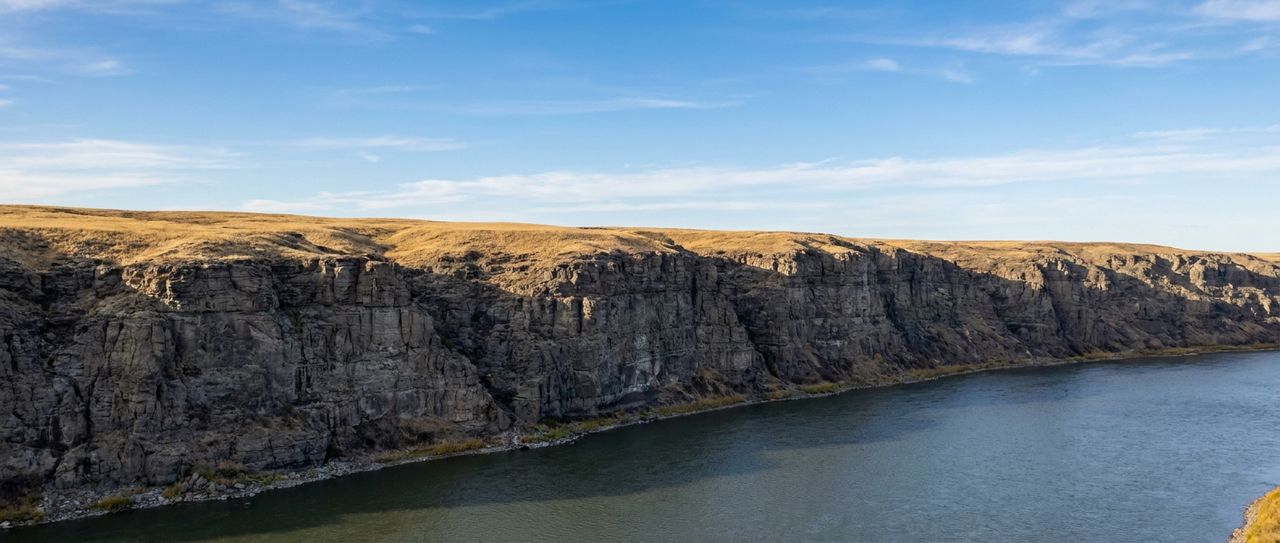
Start with the odd fact that explains the rest: Great Falls is built on the bottom of an ice-age lake. When glaciers dammed the Missouri, the water backed up into Glacial Lake Great Falls, and the lake left behind what lakes leave — fine silt and clay, mapped across the city by the Montana Bureau of Mines and Geology, layered with glacial till and the sand-and-gravel terraces the river cut as it came back.
Beneath all of it lie dark Cretaceous marine shales — the Marias River and Blackleaf formations, rock so local that geologists named the Blackleaf's Bootlegger Member for Bootlegger Trail just north of town. Marine shales and the glacial soils ground out of them are classic radon country: the EPA rates Cascade County Zone 1, its highest radon-potential designation, based on exactly this combination of geology, soil permeability, and indoor test data. Fine-grained glacial soils also crack as they dry, opening pathways that let soil gas move — uranium source below, delivery system above.
The Government's Own Numbers
None of this is a contractor's scare story — it's what the state and county publish themselves:
- About half of Montana homes tested come in at or above the EPA action level of 4.0 pCi/L, per Montana DEQ's Radon Control Program.
- In Cascade County it's worse: 60 percent of collected samples test above 4.0, per the Cascade City-County Health Department — which also notes Montana's average indoor level runs several times the national average.
- All but a handful of Montana's 56 counties are EPA Zone 1 — and none of the state is rated Zone 3, the low-risk class. Cascade County is Zone 1.
- For scale: the average outdoor radon level is about 0.4 pCi/L, and the national indoor average is about 1.3. The EPA recommends corrective action at 4.0.
Sit with the county's number. In most of the country, radon testing is a just-in-case. In Great Falls, an untested house is more likely elevated than not.
Winter Makes It Worse — and Great Falls Winter Is Long
Radon concentrations respond to how a building breathes, and from November to April a Great Falls house barely breathes at all. NOAA's climate normals put the city at about 7,700 heating degree days a year, with monthly average temperatures below 45°F from November through April and December through February averaging in the mid-20s. Sealed windows, continuous furnace operation, and the stack effect — warm air rising and escaping high, pulling replacement air up from the soil below — all push readings up in exactly the months you're indoors most. It's also why testing during heating season gives you the most honest number your house will produce.
The Housing Stock Leans Into It
Great Falls is a mid-century city. It boomed through the 1950s and 60s around Malmstrom Air Force Base and the smelter across the river in Black Eagle, and the housing shows it: roughly two-thirds of Cascade County's homes were built before 1980, decades before anyone roughed a radon pipe into a foundation — and in a climate where frost-depth footings are mandatory, many of those homes carry full basements. Finished basements make it personal: the family room, the guest bedroom, the home office are all sitting at the bottom of the radon column. None of this makes a house bad. It makes a house untested at your own risk, in a county where the odds genuinely aren't in your favor.
The Fix Is Boring, and That's the Good News
For all the geology stacked against this region, the solution is an afternoon of skilled work: an active sub-slab depressurization system that intercepts the gas below the foundation and vents it above the roof, verified by a follow-up test. High radon in Great Falls is a solved problem — what's unsolved is the majority of houses that haven't checked. Start with the test →